Large furniture is the hardest part of any move. A conference table, a sectional sofa, a filing cabinet system, or a heavy desk can get scratched, dented, or broken in minutes if handled incorrectly. And in New Jersey, where buildings have narrow hallways, tight stairwells, and limited elevator access, the risk goes up.
Whether you are relocating a commercial space or a home, knowing how to handle furniture moving in New Jersey the right way protects your investment and saves you from replacement costs.
Why Large Furniture Gets Damaged During a Move
Most furniture damage does not happen on the truck. It happens during the loading and unloading process, going through doorways, turning corners, and moving through stairways. Furniture accounts for the highest percentage of damage claims in the moving industry.
The common causes include:
- Lifting without proper grip or balance, leading to drops
- Forcing large pieces through tight doorframes without measuring first
- Stacking items on the truck without securing them
- Skipping protective wrapping on wood, glass, or upholstered surfaces
- Dragging furniture across floors instead of lifting it
For commercial moves in New Jersey, the stakes are higher. Office furniture like modular workstations, executive desks, and lobby seating costs thousands to replace. Damage during a move means budget loss and delayed setup at the new location.
Measure Doorways and Hallways Before Moving Day
This step saves more furniture than any amount of padding or wrapping. Before the move, measure every doorway, hallway, staircase, and elevator opening at both the old and new locations. Then measure the largest dimension of each furniture piece.
You will find that many damage incidents happen because someone assumed a couch or desk would fit through a door, and it did not. Forcing a piece through a space it does not fit causes frame cracks, torn upholstery, and wall damage.
What to Measure
- All entry and exit door widths, including the frame
- Hallway widths at the narrowest point
- Stairway width and ceiling height at turns
- Elevator interior dimensions if the building has one
- The height, width, and depth of every large furniture item
If a piece does not fit, disassembly is the answer, not force.
Disassemble What You Can Before the Move
Most large furniture is built to come apart. Conference tables have removable legs. Modular desks break down into panels. Bed frames, shelving units, and sectional sofas all have connection points that allow disassembly.
Taking furniture apart before the move does three things:
- Reduces the size and weight of each piece for safer handling
- Lowers the risk of hitting walls and doorframes
- Makes loading and unloading on the truck faster
Keep all screws, bolts, and small hardware in labeled bags taped to the piece they belong to. This prevents lost parts and speeds up reassembly at the new location. For commercial furniture systems, take photos of the assembly before taking it apart so the setup crew has a reference.
Use the Right Wrapping and Padding Materials
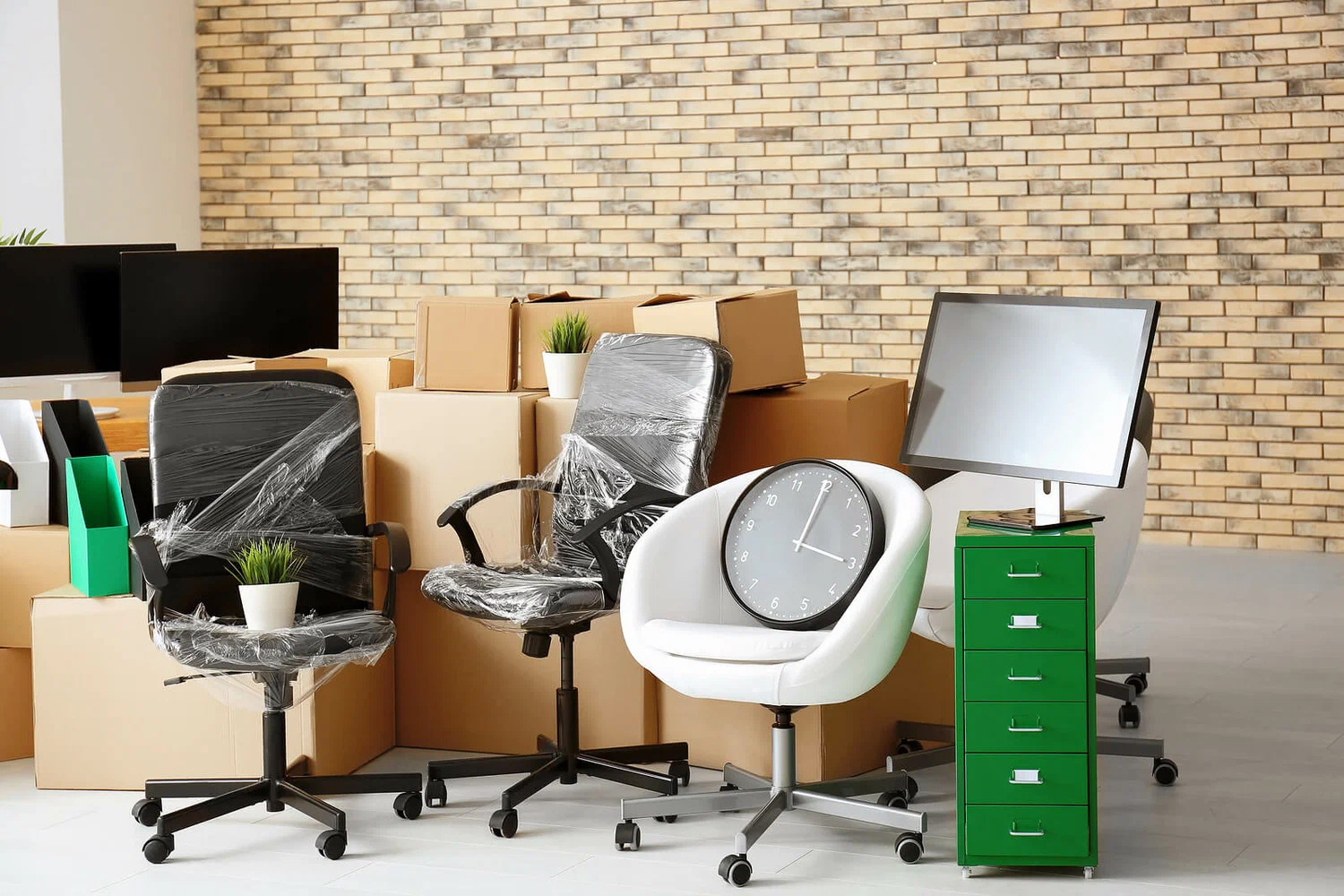
Bare wood, glass tops, leather, and metal finishes scratch and dent during transport. Wrapping each piece before it goes on the truck is not optional if you want it to arrive in the same condition.
How to Protect
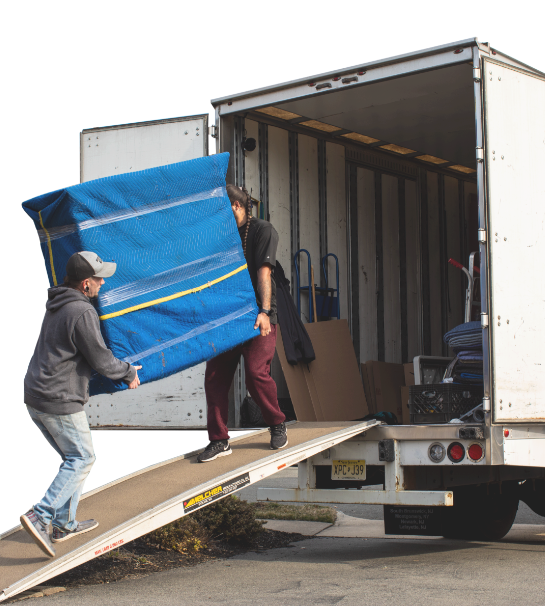
- Moving blankets for wood surfaces, tabletops, and desks
- Stretch wrap for upholstered items to prevent tears and stains
- Bubble wrap for glass components, mirrors, and decorative pieces
- Cardboard corner protectors for sharp edges on shelving and cabinets
- Furniture pads between stacked items on the truck
For furniture moving in New Jersey, where loading docks and building lobbies see rain, snow, and humidity depending on the season, waterproof wrapping adds another layer of protection during transit.
Lift With the Right Technique and Equipment
Back injuries and dropped furniture go hand in hand. Heavy furniture needs proper lifting technique and, in many cases, equipment.
- Use furniture dollies for flat, heavy items like filing cabinets and dressers
- Use shoulder straps or lifting harnesses for items going up or down stairs
- Carry heavy items close to the body and lift with the legs, not the back
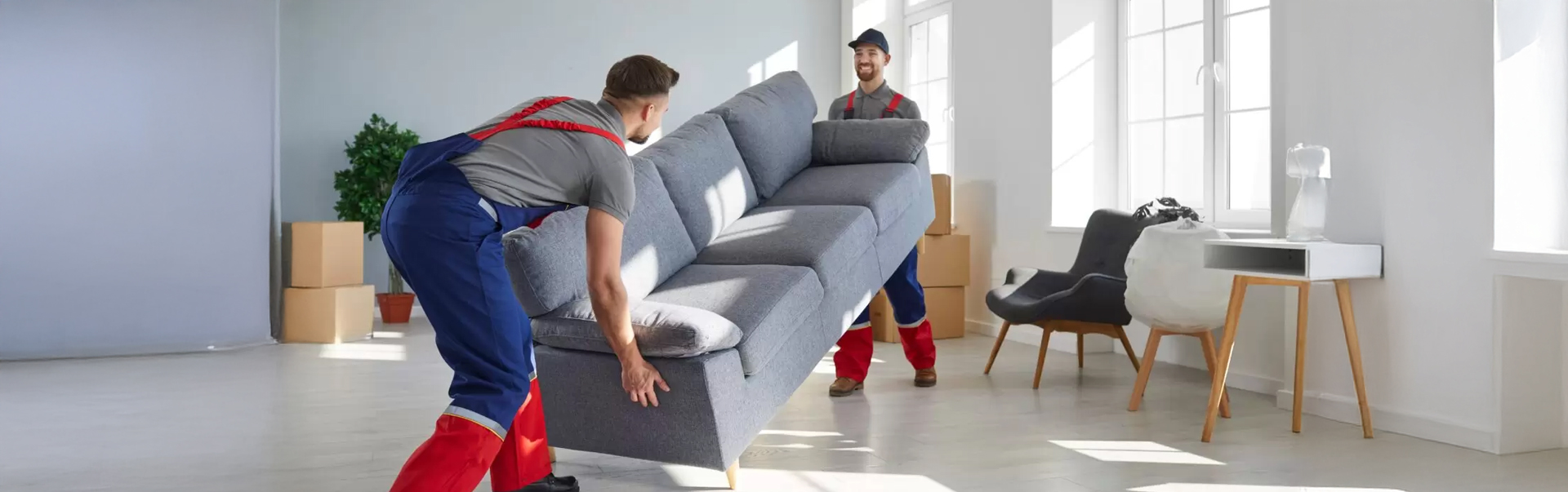
- Have at least two people on every piece that weighs over 50 pounds
For commercial moves, items like safes, server racks, and industrial shelving may require specialized equipment. Attempting to move these without the right tools leads to injury and damage.
Secure Everything Inside the Truck
Loading the truck is not just about fitting everything in. Items shift during transit, and unsecured furniture slides, tips, and collides with other pieces. The Federal Motor Carrier Safety Administration requires cargo to be secured to prevent movement during transport, and this applies to moving trucks as well.
Use ratchet straps to hold large items against the truck walls. Place heavier pieces on the bottom and lighter items on top. Fill gaps with soft items like cushions or blankets to prevent shifting.
The Rite Move Handles Furniture Moving in New Jersey the Right Way
At The Rite Move, the team handles furniture moving in New Jersey for offices, commercial spaces, and homes. From disassembly and wrapping to transport and reassembly, every step focuses on getting your furniture to the new location without a single scratch.
Call The Rite Move today and make sure your furniture arrives the same way it left.