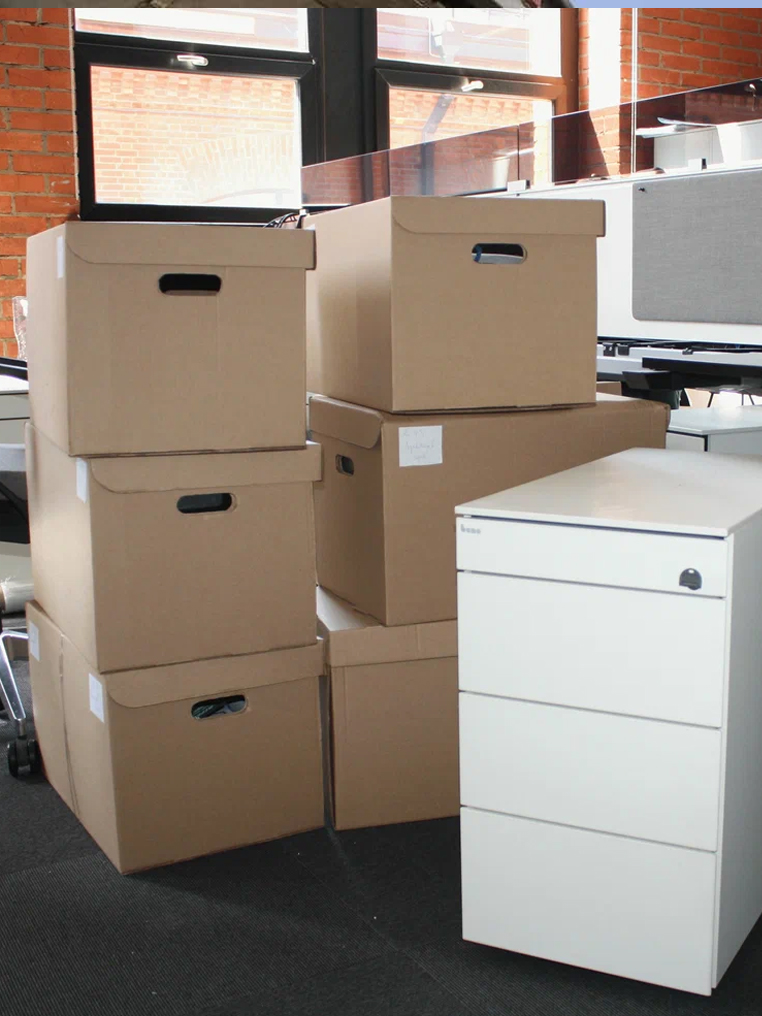
Moving an office is not like moving a house. When a home move takes extra time, you lose a weekend. When an office move runs behind schedule, you lose clients, revenue, and productivity. For businesses in New Jersey, where commercial leases, contracts, and deadlines do not pause for a relocation, every lost hour has a dollar amount attached to it.
That is why planning for an office moving in New Jersey starts with one goal: keep downtime as short as possible.
How Downtime Costs Effect During an Office Relocation
Most business owners underestimate how much a move disrupts operations. The average office relocation causes two to five days of reduced productivity per employee. For a company with 20 employees, that translates to 40 to 100 lost workdays.
Now add the cost of paused client services, delayed projects, missed calls, and IT system outages. You will notice that the financial impact of downtime often exceeds the cost of the move itself.
The good news is that most of this downtime is avoidable with the right plan.
Plan at Least 3 Months Before the Move Date
Rushing an office move is the number one reason businesses face extended downtime. A timeline of 8 to 12 weeks gives you enough room to coordinate every moving part without last-minute chaos.
Build a Move Team Inside Your Company
Assign one person or a small group from your staff to oversee internal coordination. This team handles communication between departments, tracks packing progress, and serves as the contact point for your moving company. Without this, tasks fall through the cracks, and delays pile up.
Create a Department-by-Department Schedule
Not every department needs to move on the same day. Staggering the move allows some teams to keep working while others relocate. For example, your sales team can operate from the old office while the IT department sets up infrastructure at the new location.
This phased approach is one of the most effective strategies during office moving in New Jersey because it keeps revenue-generating functions active throughout the process.
Handle IT and Telecom Before Moving Day
Technology downtime is the most damaging part of any office relocation. If your phones, internet, servers, or cloud access go down, your entire operation stops.
Here is what needs to happen before the physical move begins:
- Contact your internet and phone providers at least 6 weeks in advance to schedule service at the new location
- Back up all server data and critical files before disconnecting any hardware
- Test network and Wi-Fi connectivity at the new office before moving equipment in
- Label every cable, monitor, and device by workstation, so reassembly is fast
- Have your IT team or provider on-site at the new office on move day
A study by Gartner found that the average cost of IT downtime for businesses is $5,600 per minute. Even if your company operates on a smaller scale, one full day without email, file access, or phone service sets you back in ways that are hard to recover.
Communicate the Move to Clients and Vendors Early
A missed delivery, a returned mail package, or a client showing up at your old address damages relationships. Send out notifications at least 4 weeks before the move. Update your address on Google Business Profile, your website, social media, and any directory listings.
For businesses that rely on foot traffic or scheduled client visits, this step is not optional. It protects your revenue stream during the transition.
Pack Smart and Label Everything
Office packing is different from residential packing. You are dealing with sensitive documents, electronics, furniture systems, and shared equipment that multiple departments use.
- Use color-coded labels for each department or floor
- Pack non-essential items first and leave daily-use items for last
- Dispose of outdated equipment and files before the move to reduce volume
- Keep a separate box of essentials for each department that travels last and arrives first
This level of organization cuts unpacking time in half and gets your team back to work faster after the office move in New Jersey is complete.
Choose a Moving Company That Understands Commercial Relocation
Residential movers and commercial movers are not the same. Commercial relocation involves the disassembly of modular furniture, handling of IT equipment, coordination with building management at both locations, and working within specific loading dock schedules.
Ask these questions before hiring a mover:
- Do you handle office furniture disassembly and reassembly?
- Can you move during evenings or weekends to reduce business-hour disruption?
- Do you provide packing materials and labeling systems for commercial moves?
- Are you licensed and insured for commercial relocation in New Jersey?
The Rite Move Keeps Your Office Relocation on Schedule
At The Rite Move, the team specializes in office moving in New Jersey for businesses of all sizes. From planning and packing to IT coordination and furniture setup, every step is handled with the goal of getting your team back to work with minimal disruption.
Contact The Rite Move today and make your office relocation the one thing that does not slow your business down.